

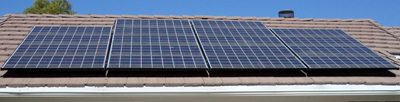
Shading of just 10% of
a module by dirt or bird
droppings can reduce its
power output by 50%!
Solar Photovoltaic System Cleaning and Maintenance
(and for solar water-heating and for tracking units too!)
for homeowners, HOAs and Property
Management companies in the counties
of Los Angeles, Ventura, and Orange'
'tune-ups', and system output improvement:
(read to also learn 'secrets' about your own system!)
-----scheduled maintenance plans also available-----
>Type 1: Cleaning needed for output improvement
--the most requested service--
> we can clean all module glass sun-surfaces
(with ambient-temperature de-mineralized
cleaning solution, to prevent any glass-shock
or hard-water spots.)
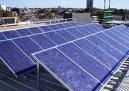
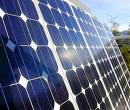
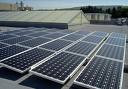
rooftop solar thermal water-heating equipment;
see #7 below.)
Did you know?
>>Type 2: Important rooftop maintenance
--a close second-most requested service--
> > we can inspect modules for signs of degradation
(color changes, fogged glazing, de-lamination,
warping, or water leaks), cracked glazing, and/or
bent frames)
> > we can check all roof-top connections
> > we can tighten all roof-top mounting hardware
(it can loosen up, thanks to the wind always
tugging back & forth, trying to lift those many
long flat panels; wind force on the roof is far
different than that at ground level)
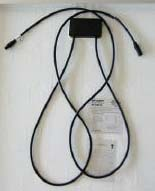
> > we can inspect exposed wiring for rodent & other
damage (see left photo below)
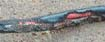
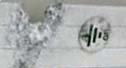
> > we can check for rust, galvanic corrosion, and
electrolysis (see right photo above)
> > we can secure any wiring loose under the modules
> > we can clip any new interfering vegetation growth
> > we can inspect that the cable-ties are UV-resistant
and are weather-resistant.
> > we can verify that cables are not exceeding
acceptable bend-radius and that they have any
needed drip-loop prior to entry points.
> > we can inspect module-to-module ground connections
> > we can apply restorations or sealants
> > we can verify proper required air-flow clearance
between the modules and the roof
> > we can verify that there are sufficient support legs
('standoffs') under the panels and their racking
--the correct number for some areas is not enough
for windier areas; panels may exceed their
flex-limit without sufficient stiffening (support legs)
> > we can inspect the sealants applied around all
rooftop penetrations
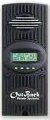
> > we can clean away cooling-inhibiting dust and dirt
from the electrical combiner box and from the
DC-to-AC inverter(s)
for rooftop solar thermal water-heating equipment;
see #7 below.)
Roof Danger Factor:
Height, power lines, heat, glass sheets--
not a place to send a maid,
a window-washer,
a student, or a handyman!
>>>Type 3: Making use of your warranty

> > > we can check the power output of each rooftop
solar photovoltaic module
(most have exacting 25-year output warranties
each, so you replace any that are not performing
to warranty specifications).
>>>>Type 4: One year-round tilt vs seasonal tilts
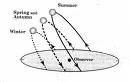
> > > > We can adjust the altitude tilt-angle of
the modules for maximum intake of sun,
with these options (note- if a module was
standing 'straight up & down', that would
be 90 degrees, and if were laying flat on
most sidewalks, that would be 0°):
> > > > . . . for one best year-round average setting,
we can adjust all modules to a 34-degree tilt
(the latitude in L.A. area) from horizontal zero.
> > > > . . . for maximum output in summer months,
we can adjust tilt-angle back 10 to 15 degrees
from 34° to 19-24°, because the sun is higher
in the sky for that part of the year. This summer
adjustment is known as 'summer bias'.
> > > > . . . for maximum output in winter months,
we can adjust tilt-angle forward 10-15 degrees
from 34° to 44-49°, because the sun is lower
in the sky for that part of the year. This winter
adjustment is known as 'winter bias'.
(see example of tilt-angles 24°, 34°, and 44° below)
The goal of these changes: keeping the sun-to-
solar-panel's 'incidence angle' (a measure of
deviation of something from being "straight on"),
as close to 90° as possible as the sun changes
its place in the sky as the seasons change.
Many people have never noticed this:
At noon in the summer,
the sun is almost directly above you.
At noon in the spring and winter,
the sun is more south from being above you.
At noon in the winter,
the sun is even further south from being above you. 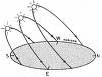
This should explain it:
Summer noon sun is high in the mid-sky,
Spring & fall noon sun is a bit lower,
Winter noon sun is low in the southern sky.
For those that want to make 4 adjustments per
year as to get the highest output: in spring the
tilt angle should be adjusted to equal your latitude;
in summer the tilt angle to equal your latitude,
minus 10 degrees; in fall the tilt angle to equal
your latitude; and in winter the tilt angle equal
to your latitude, plus 10 degrees.
With such adjustments, the maximal efficiency
could be continually obtained throughout the year.
This involves work, time, and expense;
so, most homeowners choose to instead
use just the one average setting of
their location's latitude, right in the middle.
Here are the 'Solar Seasons':
Solar Winter is October 13 to February 27
Solar Spring is February 27 to April 20
Solar Summer is April 20 to August 22
Solar Fall is August 22 to October 13
>>>>>Type 5: Adjusting for foggy-morning areas

> > > > > Optimum system performance depends on
panels receiving 'clean' sun from 9am to 3pm. If you live in an area that usually
has morning fog past 10am but usually has
sunny afternoons past 3pm, then the panels
should be adjusted to face south-southwest
instead true-south. We can usually adjust
this for you.
>>>>>>Type 6: Solar pre-purchase inspections

> > > > > >we can inspect all systems for
pre-purchase, sale, and/or transfer
situations, typically to document
obvious system deficiencies or
code violations. Can assist buyers, sellers, banks, home inspectors and
property inspectors.
>>>>>>>Type 7: Solar water heating systems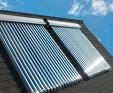
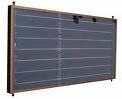
There are 2 main thermal types:
'Evacuated Tube' (above left)
and 'Flat Plate' (above right)
and occasionally a third type,
'Thermosiphon' (below)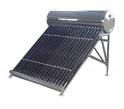
sale, and/or transfer situations,
typically to document obvious system
deficiencies or code violations.
Can assist buyers, sellers, banks,
and home/property inspectors.
> > > > > > >we can clean all module glass sun-surfaces
(with ambient-temperature
de-mineralized cleaning solution, to
prevent any glass-shock or
hard-water spots.)
> > > > > > >we can check all roof-top connections
> > > > > > >we can trace any leaks
> > > > > > >we can advise of methods to determine
internal galvanic corrosion (crud inside
due to use of dissimilar metals in
connection)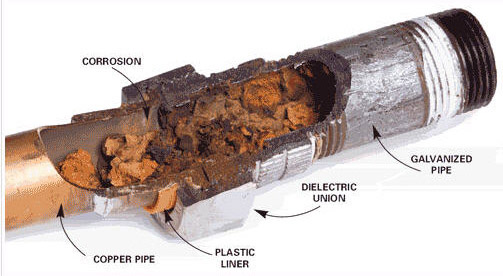
> > > > > > >we can inspect systems to verify if they
have a cleaning provision
> > > > > > >we can flush most tank types to remove
silt
> > > > > > >we can change the heat-transfer fluid
(like anti-freeze) on close-looped systems
> > > > > > >we can trim any vegetation grown causing
interference or shading
> > > > > > >we can replace any fouled liquid
> > > > > > >we can replace the anode rod
(new anode rod on left,  worn one on right)
An anode rod is like a 'corrosion magnet'.
Like a 'bodyguard' for the water heater,
it keeps the tank from rusting out.
It attracts corrosion to keep it way from other parts
the water heater. It can last about 5 years, but
using salt/sodium for water-softening can greatly
speed its death. It is a rod made of either magnesium
or aluminum, formed around a steel core wire.
Located in the top of the tank, it is actually
very low-priced. Some tanks even have two.
When there is no 'sacrificial' metal left on the rod,
the corrosion attacks the other parts of the water
heater. Replace it before it breaks, drops, moves
around, and cracks the glass lining of the water tank.
> > > > > > >we can perform annual water heater flush
> > > > > > >we can inspect for any water-loss points
NOTE: we have the factory-issued Installation and
Operation manuals for virtually all solar
water-heating systems in use.
>>>>>>>>Type 8: Batteries
systems do not use batteries
at all; only a small percentage
of these homes use batteries as
emergency back-up power storage.
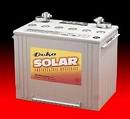 solar battery)
batteries as back-up typically use four batteries.
'Off-grid' homes (homes not hooked up to the
power company) use MANY more batteries,
giving the home all of its power day and night.
About batteries in 'off-grid' homes:
Solar panels do not 'power'
anything in the home.
Everything in the home is
powered by a battery bank.
Solar panels are there just to
charge up the battery bank.
The battery bank is like a 'bank account':
you can only 'take out' (use for lighting, etc)
what you 'put in' (charging from the sun).
>>> > > > > >we can inspect batteries for any visible
sign of imperfection, especially
corrosion or leakage
> > > > > > > >we can measure the condition of each
individual cell of each battery
(not available for all battery types)
A '12-volt' battery that tests to having
12.0 volts is only about half-charged;
fully charged is closer to 13 volts!
> > > > > > > >we can check all battery connections
> > > > > > > >we can verify that your battery rack
has proper spill containment, rack
seismic security, and nearby
neutralization (for spill clean-up).
> > > > > > > >we can verify, per code, that all live battery parts are guarded
> > > > > > > >we can verify, per code, that no top
of a lead-acid battery case is within
six inches of metal
The 3 main types of solar deep-cycle batteries:
flooded lead acid, gel, and AGM.
> > > > > > > >we can check all individual cells of
each battery via hydrometer
(not available for all battery types)
Boring, but important:
A metered voltage test of a battery is
not a reliable indicator of its condition;
sulphate can cause a 'resistance to charging'
and also give a 'false high-voltage reading'.
Only a specific gravity test (hydrometer)
of each cell will give accurate results.
Don't work on these batteries
without eye protection and while
wearing clothes you don't want destroyed!
> > > > > > > >we can fill to proper level each
individual cell of each battery with
distilled water (NOT tap water)
The fluid in new 'wet' (lead acid) batteries
is 1/3 sulphuric acid, 2/3 distilled water;
in 'gel' batteries, it is more like a paste.
Later, and fully charged, wet batteries
become about 1/4 sulphuric acid.
in hopes of 'reviving it' and
eliminating the need to replace it
1- Batteries discharge more in winter.
2- The outer cells lose the most electrolite.
> > > > > > > >we can inspect battery enclosures
for proper upper and lower venting
to the outside and for proper spillage
retention capability
> > > > > > > >we can clean & adjust all interconnects
> > > > > > > >we can re-torque battery connections
has the low-price option that
increases battery life:
a temperature-sensor that
adjusts charging rate.
Without this option, batteries often
overcharge during the summer and
undercharge during the winter.
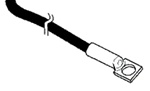 < a battery temperature sensor)
A 'secret' about using battery 'temperature sensors':
If you don't have a temperature sensor on
a battery in the battery bank, the charge
controller will default to the temperature
sensor built in to the controller itself.
So, if the controller is located indoors where
it is warm in the winter, but the battery bank
is located outdoors or anywhere where it is at
least 10 degrees colder than where the charge
controller is, and if there is no temp sensor on
the battery bank, then the controller will 'think'
that the batteries are 'warmer' than they really
are in the winter-temperature months.
This will cause the batteries to be undercharged
in the winter. The same dynamics in reverse, in
the summer (where a house interior-mounted
controller might be in air-conditioned comfort
while the battery bank is outside in the heat),
will cause the batteries to 'overcharge', causing
gassing and electrolyte loss, shortening their life.
Batteries kept on average near
90% charge should last about twice
as long as those kept at 50% charge
> > > > > > > >we can perform a 'corrective equalization
charge' on the entire battery collection.
This 'controlled overcharge' of all cells
refreshes the entire collection and
brings all cells to equal strength.
(Not available for sealed batteries)
This process does cause heat and
'gassing', and should be monitored.
> > > > > > > >we can help you extend the life of your
battery collection by rotating the positions of the batteries within the pack. This more evenly distributes
the charge between the cells.
1: Fully-charged batteries don't freeze until -100°.
2: Fully-discharged batteries freeze at only +32°.
Note: not all services available for all battery types.
'Gel' or 'sealed' batteries can not be equalized
or have their electrolyte level corrected.
Nor can their individual cells be tested.
> > > > > > > >we can perform a monthly or an every-
other-month 'battery servicing'
(important if you have a battery-
bank that costs $10,000 to replace
when it eventually dies).
NOTE: we have the factory-issued User Manuals
for virtually all major solar batteries in use.


SolarSurgeon.com
(818) 883-6969
Click here to e-mail
:: Consulting on any solar project or situation ::
Preventative and Corrective Maintenance
:: Advise of upgrades/re-calls :: Suggestions ::
Increase life-span and efficiency of system
:: Photos of roof-top items can be obtained ::
Stop under-performance & loss of efficiency
:: FREE GENERAL ESTIMATES ::
Emergency Service Available 24/7
Affiliates in most major cities
All content
©SolarSurgeon.com
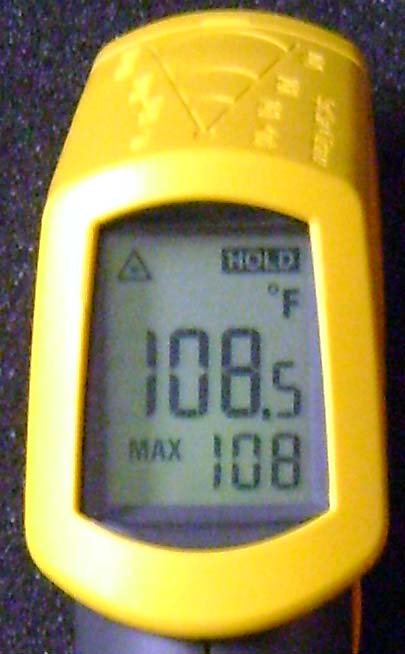
Roof temperatures are often 150°:
it is not a place for amateurs to be.
We can recommend
quick and local
solar classes for you.
FREE telephone consultation
Or need a solar system installed?
Referrals to solar installation
contractors in all major cities
We are the original;
often imitated, never duplicated!
IMPORTANT NOTE:
We are 'vendor neutral';
that is, no particular brand of
any solar manufacturer sponsors
us in any way. This means that
we can direct you to the best
components for your needs,
not influenced by a brand contract.
And if any major repair is ever needed,
we can either refer you to multiple contractors
or we can tell you secrets about how to screen them
for true solar-system knowledge and experience.
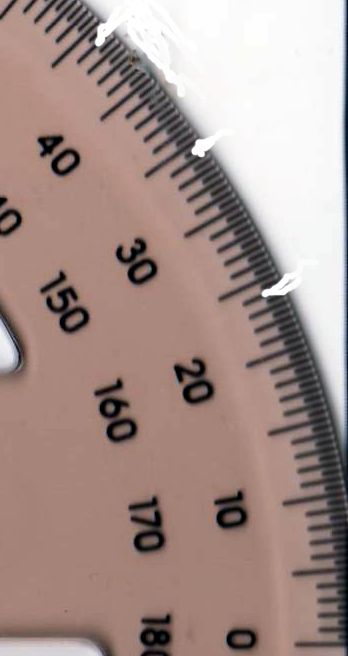 ADJUSTING ALTITUDE TILT-ANGLE
OF PHOTOVOLTAIC MODULES »»
Best year-round L.A. average setting: 34°
For most summer output, adjust to 19-24°
For most winter output, adjust to 44-49°
Up to 10% more output using seasonal tilts!
Latitude List: Anchorage 62°, Chicago 42°,
Los Angeles 34°, Phoenix 33°, Redding 40°,
San Diego 32°, San Francisco 37°, Tucson 32°
Amateurs often accidentally
break or stain roofing material!
Also available:
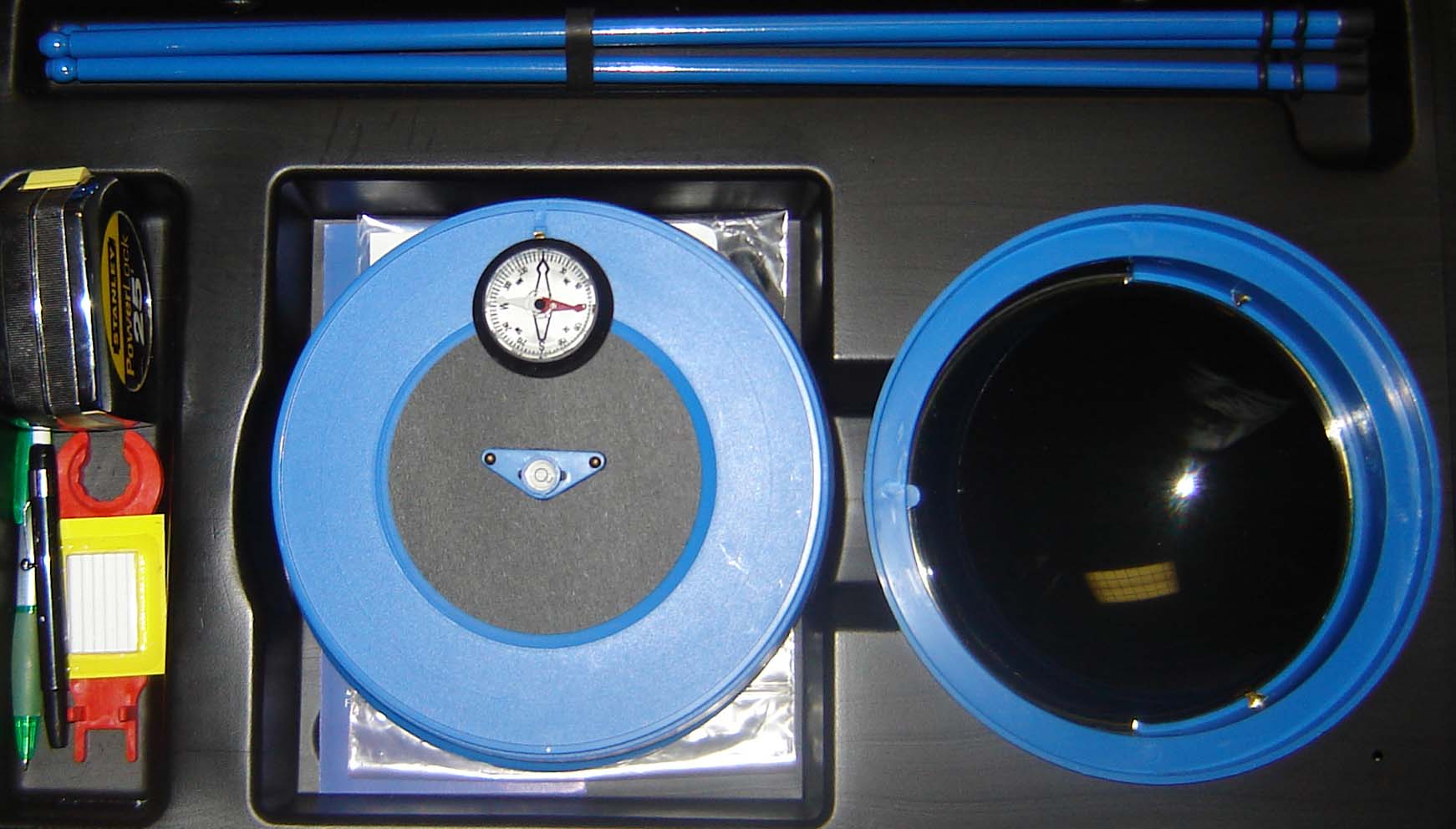
We can help with the formal Solar Site Shading Analysis
(Insolation Quantification) scientific reports that are
required to be submitted with rebate & permit requests.
We can assist you with obtaining the required equipment,
related training if needed, or with referrals to persons who
can do the formal analysis for you.
Below, moving from left to right,
gives a general idea of the 6 primary
steps --in order-- of a site analysis
(half of the work is on the roof,
the other half is on computer):
obtaining your own site analysis
equipment & software as above,
the reliable & trusted type
that we solely recommend
--and we train others to use--
is (click here:) SolarPathFinder

If you would like information on obtaining
training in energy auditing,
the one that we solely recommend
--and that we use knowledge from ourselves--
is (click here:) Energy Audit Training

NEASI
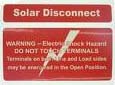 Check your warning labels!
As of National Electric Code 2008,
specific permanent labels are
required by code to be installed
at the power panel and at several other places, on the roof and on ground equipment.
We can assist.
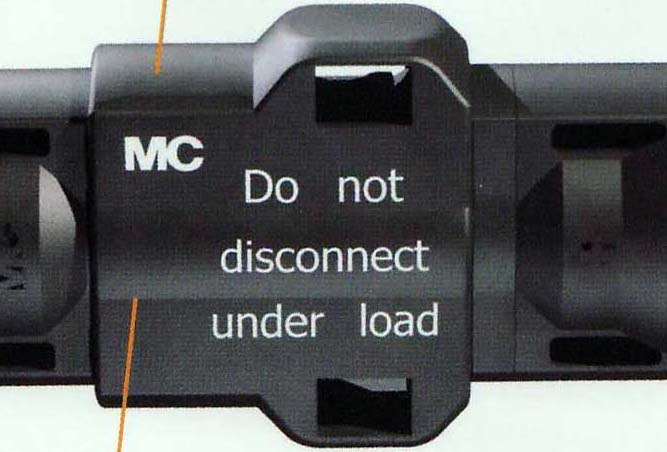
Do you have the locking cable
latches required by Code since
2008? Ask for information.
We have SECURITY ALARMS,
GPS TRACKING DEVICES,
and SECURITY HARDWARE
for your rooftop photovoltaic arrays.